Mode durable : le guide complet du style écologique en 2026
L’industrie de la mode est à la croisée des chemins. Pendant des décennies, le système a été construit sur un modèle de consommation constante : produire plus de vêtements, plus rapidement et moins cher, encourageant les consommateurs à acheter, à porter brièvement et à jeter. Les coûts environnementaux et humains de ce système sont devenus impossibles à ignorer. L’industrie de la mode est responsable d’environ 10 % des émissions mondiales de carbone, soit plus que les vols internationaux et le transport maritime réunis. C’est le deuxième consommateur d’eau au monde, et la teinture textile est le deuxième pollueur d’eau potable au monde. Environ 85 % de tous les textiles produits finissent dans les décharges chaque année, et moins de 1 % des vêtements sont recyclés en nouveaux vêtements.
Ces statistiques donnent à réfléchir, mais elles ne représentent pas tout. Partout dans le monde, les créateurs, les marques et les consommateurs s’efforcent de construire un meilleur système de mode, respectueux à la fois des personnes et de la planète. La mode durable est passée d’une préoccupation de niche à un mouvement grand public, et en 2026, il existe plus d’options que jamais pour s’habiller de manière éthique et élégante. Ce guide vous aidera à comprendre ce que signifie la mode durable et comment créer une garde-robe qui correspond à vos valeurs sans compromettre le style.

Que signifie réellement la mode durable ?
La mode durable est un terme générique qui englobe une série de pratiques visant à réduire l’impact environnemental et social de la production et de la consommation de vêtements. Cela comprend des pratiques de travail éthiques, des matériaux respectueux de l’environnement, la réduction des déchets, des modèles de production circulaires et une consommation consciente. Comprendre les différentes dimensions de la durabilité vous aide à faire des choix éclairés sur les domaines sur lesquels concentrer vos efforts.
La durabilité environnementale dans la mode aborde l’impact écologique de la production de vêtements. Cela inclut la réduction des émissions de carbone, la conservation de l’eau, l’élimination des produits chimiques toxiques, la protection de la biodiversité et la minimisation des déchets. Les pratiques respectueuses de l’environnement incluent l’utilisation de matériaux biologiques ou recyclés, la mise en œuvre de processus de production économes en eau, l’utilisation d’énergies renouvelables dans la fabrication et une conception axée sur la durabilité et la recyclabilité.
La durabilité sociale aborde l’impact humain de la mode. Cela implique de garantir des salaires équitables et des conditions de travail sûres aux travailleurs du textile, de respecter les droits des communautés autochtones dont les savoirs traditionnels éclairent la production textile et de créer des lieux de travail inclusifs qui valorisent la diversité et la dignité. La durabilité sociale reconnaît qu’un vêtement ne peut pas être véritablement durable si les personnes qui l’ont fabriqué ont été exploitées dans sa production.
La durabilité économique concerne les modèles économiques qui régissent la production de mode. Les modèles commerciaux de mode rapide qui privilégient le volume à la valeur sont par nature non durables car ils dépendent d’une consommation et d’une disponibilité constantes. Les modèles alternatifs, notamment la production sur commande, la fabrication en petites séries, les services de réparation et les modèles de location, offrent des structures économiques plus durables qui alignent les intérêts des entreprises, des consommateurs et de la planète.
En tant que consommateur, comprendre ces différentes dimensions vous aide à faire des choix plus nuancés. Aucun vêtement n’est parfaitement durable : chaque vêtement a un certain impact environnemental et social. L’objectif n’est pas la perfection mais le progrès : choisir des options meilleures que les alternatives et améliorer continuellement vos habitudes de consommation.
L’importance des matériaux : choisir des tissus durables
Le tissu à partir duquel un vêtement est fabriqué est l’un des déterminants les plus importants de son impact environnemental. Différentes fibres ont des empreintes environnementales très différentes, et comprendre les compromis vous aide à faire des choix plus éclairés.
Le coton biologique est cultivé sans pesticides ni engrais synthétiques, ce qui le rend nettement meilleur pour la santé des sols, les systèmes d’eau et les agriculteurs que le coton conventionnel. Cependant, le coton biologique nécessite encore beaucoup d’eau pour pousser. Recherchez la certification Global Organic Textile Standard (GOTS) lorsque vous achetez des produits en coton biologique, car elle garantit le respect des normes environnementales et sociales tout au long de la chaîne d’approvisionnement.
Le lin est fabriqué à partir de la plante de lin, qui nécessite très peu d’eau et peut être cultivée sans intrants synthétiques dans de nombreux climats. Le lin est biodégradable, durable et devient plus doux au fil des utilisations. C’est un excellent choix pour les vêtements par temps chaud et les textiles de maison. Le principal impact environnemental du lin provient des étapes de traitement et de finition, alors recherchez des marques qui utilisent des méthodes de traitement respectueuses de l’environnement.
Le chanvre est l’une des fibres les plus respectueuses de l’environnement disponibles. Il pousse rapidement, nécessite un minimum d’eau et aucun pesticide, améliore la santé du sol grâce à son système racinaire profond et produit des rendements élevés par acre. Le tissu de chanvre est durable, respirant et devient plus doux avec l’usure. À mesure que la production de chanvre se développe et que la technologie de transformation s’améliore, les vêtements en chanvre deviennent plus accessibles et abordables.
Le Tencel et le Lyocell sont des fibres fabriquées à partir de pâte de bois récoltée de manière durable, généralement à partir d’eucalyptus, de hêtre ou de bouleau. Le processus de production utilise un système en boucle fermée qui récupère et recycle environ 99 % des solvants utilisés, ce qui le rend nettement plus respectueux de l’environnement que la production de viscose conventionnelle. Ces fibres sont douces, respirantes, biodégradables et constituent une excellente alternative durable à la rayonne conventionnelle.
Le polyester recyclé est fabriqué à partir de bouteilles en plastique post-consommation ou de déchets de polyester post-industriels. Il réduit la demande de polyester vierge à base de pétrole, détourne les déchets des décharges et nécessite moins d’énergie pour être produit que le polyester vierge. Cependant, le polyester recyclé perd toujours des microplastiques lorsqu’il est lavé et n’est pas biodégradable. Il est préférable de l’utiliser pour les vêtements qui nécessitent des qualités de performance, comme les vêtements de sport et les vêtements d’extérieur.
La laine est une fibre naturelle et renouvelable, biodégradable et durable. Lorsqu’elle provient d’exploitations agricoles qui pratiquent le pâturage régénératif, la production de laine peut réellement bénéficier à l’environnement en améliorant la santé des sols et en séquestrant le carbone. Recherchez des certifications telles que Responsible Wool Standard (RWS) et ZQ qui garantissent le respect des normes en matière de bien-être animal et d’environnement.
Le tissu Deadstock est un tissu qui a été produit mais jamais utilisé. Il s’agit essentiellement de déchets textiles provenant de l’industrie de la mode elle-même. L’utilisation de tissus morts empêche que des matériaux en parfait état ne soient envoyés dans les décharges et ne nécessite aucune ressource supplémentaire pour la production. De nombreuses marques durables construisent leurs collections à partir de tissus invendus, ce qui signifie que chaque pièce est par nature en édition limitée.
Construire une garde-robe durable
Construire une garde-robe durable est un processus, pas un événement. Cela se produit progressivement à mesure que vous faites des choix plus conscients sur ce que vous apportez dans votre garde-robe et sur la façon dont vous traitez les pièces que vous possédez déjà. Le vêtement le plus durable est celui que vous possédez déjà : le porter plus longtemps et en prendre soin correctement est le choix le plus important que vous puissiez faire.
Commencez par auditer votre garde-robe actuelle. Identifiez les pièces que vous aimez et portez fréquemment, les pièces que vous gardez mais que vous ne portez jamais et les pièces usées ou endommagées. Séparez ces catégories et établissez un plan pour chacune. Les pièces que vous aimez méritent d’être portées davantage. Les pièces que vous ne portez jamais peuvent être vendues, données ou échangées avec des amis. Les pièces endommagées peuvent être réparées si elles valent la peine d’être conservées ou éliminées de manière responsable si elles sont irréparables.
Lorsque vous identifiez des lacunes dans votre garde-robe, achetez avec intention. Avant d’acheter quoi que ce soit, posez-vous une série de questions : ai-je vraiment besoin de cette pièce ou est-ce que j’achète avec émotion ? Est-ce que cela me va bien et flatte mon corps ? Est-il fabriqué à partir de matériaux de qualité qui dureront ? Est-ce que cela fonctionne avec au moins trois articles existants dans ma garde-robe ? Vais-je encore vouloir porter ça dans trois ans ? Si la réponse à l’une de ces questions est non, remettez l’objet en place et partez.
Privilégiez la qualité à la quantité. Un vêtement bien fait qui coûte plus cher mais dure des années est plus durable – et finalement plus économique – que cinq vêtements bon marché qui s’effondrent après quelques lavages. Apprenez à reconnaître une construction de qualité : coutures renforcées, fermetures éclair et boutons de qualité, vêtements entièrement doublés et tissus épais qui conservent leur forme. Ces caractéristiques de qualité indiquent un vêtement qui vous servira bien pendant des années.
Considérez les achats d’occasion et vintage comme votre première option. Les friperies, les boutiques de consignation, les ventes immobilières et les plateformes de revente en ligne offrent un accès à des pièces uniques et de qualité à des prix accessibles tout en gardant les vêtements hors des décharges. Le shopping vintage demande de la patience et un esprit ouvert, mais les récompenses (trouver une pièce vraiment unique avec une histoire et du caractère) en valent la peine.
Prendre soin de vos vêtements de manière durable
La manière dont vous prenez soin de vos vêtements affecte considérablement leur impact environnemental et leur longévité. Le linge d’un ménage moyen contribue d’importantes émissions de carbone, consommation d’eau et pollution par les microfibres. En modifiant vos habitudes de lessive, vous pouvez réduire l’impact environnemental des vêtements que vous possédez déjà tout en prolongeant leur durée de vie.
Laver moins fréquemment. La plupart des vêtements n’ont pas besoin d’être lavés après chaque port. Les jeans peuvent généralement être portés 10 à 30 fois entre les lavages, les pulls 5 à 10 fois et même les t-shirts peuvent être portés 2 à 3 fois avant le lavage s’ils ne sont pas sales. Se laver moins fréquemment permet d’économiser de l’eau, de l’énergie et réduit l’usure de vos vêtements. Lorsque vous lavez, utilisez de l’eau froide : les détergents modernes sont formulés pour fonctionner efficacement dans l’eau froide, et l’eau de chauffage représente la majorité de la consommation d’énergie du linge.
Séchez vos vêtements à l’air libre autant que possible. La chaleur du sèche-linge endommage les fibres, provoque un rétrécissement et consomme beaucoup d’énergie. Le séchage à l’air est plus doux pour les vêtements et prolonge considérablement leur durée de vie. Si vous devez utiliser une sécheuse, utilisez le réglage de chaleur le plus bas et retirez les vêtements encore légèrement humides pour minimiser les dommages. Les séchoirs et les cordes à linge sont des alternatives peu coûteuses et efficaces.
Utilisez un filtre en microfibre ou un sac de capture lorsque vous lavez des tissus synthétiques. Chaque fois que vous lavez du polyester, du nylon ou d’autres tissus synthétiques, ils perdent des fibres plastiques microscopiques qui pénètrent dans les cours d’eau et finissent par atteindre l’océan. Des produits comme le sac de lavage Guppyfriend et les filtres en microfibres pour machines à laver capturent ces fibres afin qu’elles puissent être éliminées correctement plutôt que de polluer l’environnement.
Apprenez les techniques de base en matière de réparation. La possibilité de coudre un bouton, de réparer une couture ou de réparer un petit trou prolonge considérablement la durée de vie de vos vêtements. Ces compétences sont faciles à acquérir grâce à des didacticiels en ligne et nécessitent un équipement minimal. Pour des réparations plus complexes, établissez une relation avec un tailleur ou une couturière locale : le coût de la réparation est généralement bien inférieur au coût de remplacement, et le bénéfice environnemental est significatif.
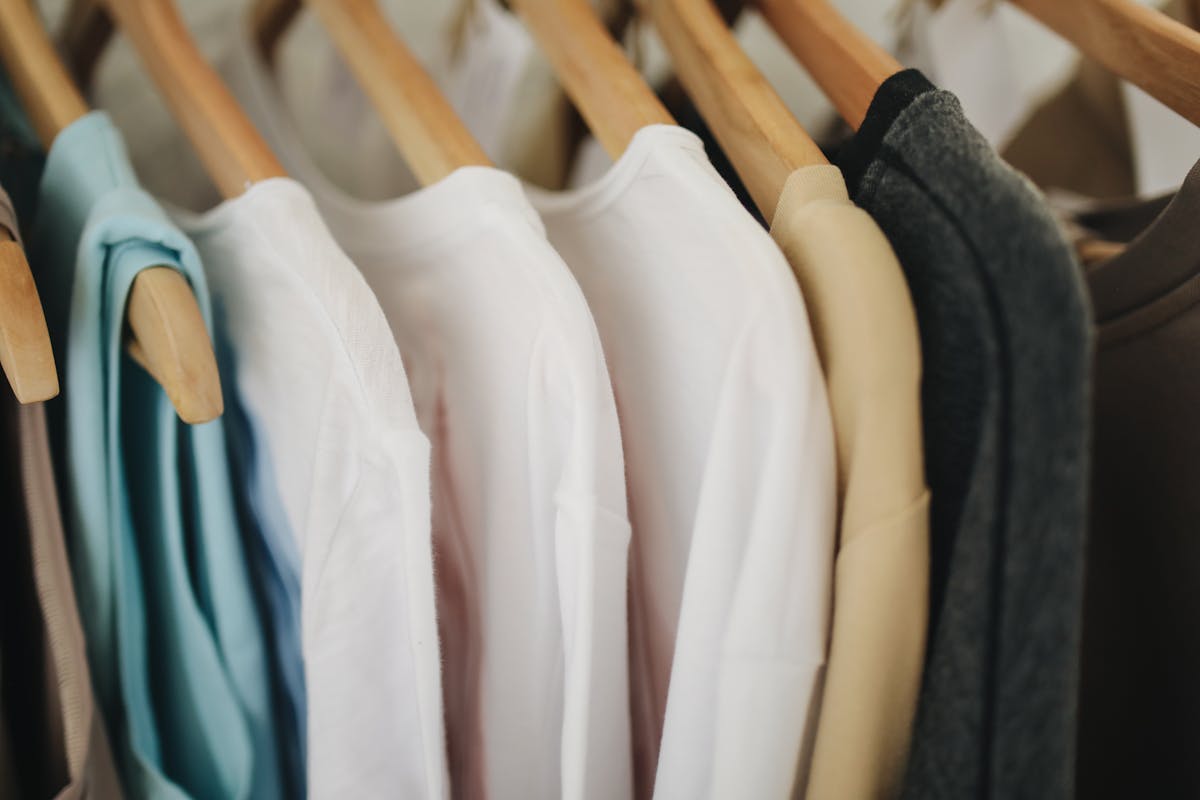
Rangez correctement les vêtements pour conserver leur état. Utilisez des cintres de qualité qui soutiennent la forme de vos vêtements. Pliez les tricots plutôt que de les suspendre pour éviter qu’ils ne s’étirent. Rangez les vêtements hors saison dans des housses à vêtements respirantes ou dans des contenants qui les protègent de la poussière, de la lumière et des parasites. Un stockage approprié évite les dommages et garde vos vêtements prêts à être portés lorsque vous en avez besoin.
Marques et pratiques d’achat durables
Soutenir les marques qui donnent la priorité au développement durable envoie un signal clair au marché indiquant que les consommateurs apprécient la responsabilité éthique et environnementale. Même si aucune marque n’est parfaite, beaucoup font de véritables efforts pour réduire leur impact et améliorer leurs pratiques.
Lorsque vous évaluez les références en matière de développement durable d’une marque, recherchez la transparence. Les marques véritablement engagées en faveur du développement durable partagent des informations détaillées sur leurs chaînes d’approvisionnement, leur approvisionnement en matériaux, leurs processus de fabrication et leurs pratiques de travail. Ils publient des rapports de développement durable avec des données et des objectifs spécifiques. Ils sont certifiés par des organismes tiers indépendants qui vérifient leurs affirmations. Le greenwashing, c’est-à-dire les déclarations trompeuses sur les pratiques environnementales, est courant dans l’industrie de la mode, et la transparence est la meilleure défense contre ce phénomène.
Les certifications à rechercher incluent GOTS (Global Organic Textile Standard) pour les fibres biologiques, Fair Trade Certified pour les pratiques de travail éthiques, B Corp pour la performance sociale et environnementale globale, OEKO-TEX pour la sécurité chimique et Cradle to Cradle pour la conception circulaire. Même si aucun système de certification n’est parfait, ces vérifications indépendantes fournissent des informations plus fiables que le seul marketing de marque.
Au-delà du choix de la marque, vos habitudes d’achat comptent. Achetez moins et choisissez bien. Évitez les achats impulsifs : mettez en place une période de réflexion avant d’acheter quoi que ce soit de non essentiel. Louez ou empruntez des vêtements pour des occasions spéciales plutôt que d’acheter quelque chose que vous porterez une seule fois. Participez à des échanges de vêtements avec des amis et des groupes communautaires. Utilisez les plateformes de revente pour acheter et vendre des vêtements d’occasion. Ces pratiques réduisent la demande de nouvelles productions et permettent aux vêtements d’être utilisés plus longtemps.
Les armoires capsules sont une application pratique des principes de la mode durable. Une garde-robe capsule est une collection organisée de pièces essentielles qui se mélangent et s’agencent pour créer un maximum de tenues à partir d’un minimum d’articles. En limitant votre garde-robe à des pièces qui s’agencent de manière cohérente, vous achetez naturellement moins, portez tout ce que vous possédez et développez un sens plus fort de votre style personnel. Une garde-robe capsule contient généralement 30 à 40 pièces, dont des vêtements, des chaussures et des accessoires – suffisamment pour la variété, mais suffisamment peu pour que chaque pièce soit portée régulièrement. La discipline d’une garde-robe capsule vous entraîne à privilégier la qualité plutôt que la quantité et à bien réfléchir avant d’ajouter quoi que ce soit de nouveau.
Les rotations de garde-robe saisonnières soutiennent l’approche capsule. Au début de chaque saison, évaluez votre garde-robe, identifiez ce qui doit être réparé ou remplacé et rangez les articles hors saison. Cette pratique permet de garder votre garde-robe organisée, de réduire la fatigue décisionnelle et de vous aider à identifier les lacunes réelles de votre garde-robe plutôt que celles perçues. Lorsque vous magasinez pour la nouvelle saison, vous le faites en sachant clairement ce dont vous avez besoin plutôt qu’en ayant le sentiment vague de n’avoir rien à porter.
Les arguments financiers en faveur d’une mode durable sont convaincants. Même si les vêtements durables ont souvent des coûts initiaux plus élevés que les alternatives de fast fashion, leur coût par usure est généralement bien inférieur. Une paire de jeans bien confectionnés à 200 $, portée 200 fois, coûte 1 $ par tenue. Une paire de jeans fast fashion à 40 $ portée 10 fois avant de s’effondrer coûte 4 $ par tenue. Investir dans la qualité n’est pas seulement meilleur pour la planète, c’est aussi meilleur pour votre portefeuille au fil du temps. Ce calcul du coût par usure est un outil utile pour évaluer si un achat en vaut vraiment la peine, quel que soit son prix.
La communauté et la connexion jouent un rôle important dans la mode durable. Les échanges de vêtements, les cercles de couture et les ateliers de raccommodage rassemblent les gens autour de valeurs communes d’artisanat et de consommation consciente. Ces communautés partagent des compétences, des ressources et des encouragements qui rendent la mode durable plus accessible et plus agréable. L’isolement de la consommation individuelle – acheter seul, porter seul, jeter seul – est remplacé par une expérience partagée de création et d’entretien d’une garde-robe ensemble. Cette dimension sociale de la mode durable est l’un de ses aspects les plus gratifiants.
L’éducation est un outil puissant pour faire progresser la mode durable. Apprendre comment les vêtements sont fabriqués – de la culture des fibres à la construction du vêtement en passant par la finition – approfondit votre appréciation du savoir-faire impliqué et fait de vous un consommateur plus exigeant. Comprendre l’impact environnemental et social des différents matériaux et méthodes de production vous permet de faire des compromis éclairés plutôt que de suivre des règles simplistes. Plus vous en savez sur la mode, mieux vous êtes équipé pour participer à la construction d’un système plus durable.
L’avenir de la mode circulaire
Le but ultime de la mode durable est un système circulaire : un système dans lequel les vêtements sont conçus pour être utilisés, réutilisés, réparés et éventuellement recyclés en de nouveaux vêtements, sans que rien ne soit gaspillé. Cette vision représente un changement fondamental par rapport au système linéaire actuel de prendre, fabriquer, jeter, qui domine la mode depuis des décennies.
Les principes de conception circulaire incluent une conception axée sur la durabilité (création de vêtements qui durent), une conception axée sur la polyvalence (création de pièces pouvant être portées de plusieurs façons), une conception axée sur la réparabilité (fabrication de vêtements facilement réparables) et une conception axée sur la recyclabilité (en utilisant des constructions à fibre unique qui peuvent être décomposées et transformées en de nouveaux vêtements). Les marques qui adoptent le design circulaire réfléchissent à l’ensemble du cycle de vie de leurs produits, depuis la matière première jusqu’à la fin de l’utilisation.
Les modèles économiques innovants soutiennent la circularité. Les services de location de vêtements permettent aux consommateurs d’accéder à des vêtements pour des occasions spécifiques sans les posséder de façon permanente. Les modèles d’abonnement proposent des rotations régulières de vêtements moyennant des frais mensuels. Les programmes de reprise permettent aux consommateurs de rapporter les vêtements usés aux marques pour les recycler ou les revendre. Les services de réparation prolongent la durée de vie des vêtements qui autrement pourraient être jetés. Ces modèles dissocient la mode de la production constante de nouveaux vêtements.
La technologie permet une mode circulaire à grande échelle. Les passeports produits numériques (codes QR ou étiquettes RFID intégrés dans les vêtements qui fournissent des informations sur les matériaux, la construction et l’entretien) facilitent le tri et le recyclage des vêtements en fin de vie. La technologie Blockchain est utilisée pour vérifier les allégations de la chaîne d’approvisionnement et garantir la transparence. L’intelligence artificielle améliore les processus de tri et de recyclage, rendant économiquement viable la récupération des fibres à partir de tissus mélangés complexes. Ces innovations technologiques constituent une infrastructure essentielle pour un système de mode circulaire.
En tant que consommateur, la pratique circulaire la plus importante consiste à garder les vêtements utilisés le plus longtemps possible. Chaque port supplémentaire d’un vêtement réduit son impact environnemental. Lorsque vous avez vraiment terminé avec une pièce, conservez-la dans le système en la vendant, en la faisant don ou en la renvoyant à un programme de reprise de la marque. Même les vêtements endommagés peuvent souvent être recyclés en nouvelles fibres ou transformés en isolants, chiffons de nettoyage ou autres produits. L’objectif est de maintenir les matériaux textiles en circulation à leur plus haute valeur le plus longtemps possible, en imitant les cycles naturels de régénération qui soutiennent la vie sur Terre.
En tant que consommateur, vous faites partie du système de mode circulaire. Chaque choix que vous faites – quoi acheter, comment en prendre soin, combien de temps le conserver, quoi en faire une fois que vous avez terminé – affecte le système. En participant à des pratiques circulaires – acheter d’occasion, louer pour des occasions spéciales, réparer plutôt que remplacer et recycler de manière responsable en fin d’utilisation – vous contribuez à construire l’infrastructure d’un avenir de mode plus durable.
Conclusion
La mode durable n’est pas une question de perfection. Il ne s’agit pas de posséder seulement une poignée de vêtements fabriqués à partir de chanvre biologique et de les porter jusqu’à ce qu’ils se désintègrent. Il s’agit de faire de meilleurs choix au sein du système actuel, un achat à la fois. Chaque fois que vous choisissez un vêtement bien fait plutôt qu’un vêtement bon marché, une pièce d’occasion plutôt qu’un neuf, une réparation plutôt qu’un remplacement, vous votez pour un meilleur système de mode avec votre portefeuille et vos actions.
Le voyage vers une garde-robe plus durable est exactement cela : un voyage. Commencez là où vous êtes, apportez les changements qui vous semblent gérables et créez une dynamique au fil du temps. Portez ce que vous possédez avec fierté, prenez soin de vos vêtements avec intention, choisissez mieux lorsque vous achetez et ne sous-estimez jamais le pouvoir de vos choix pour façonner l’avenir de la mode. Le style et la durabilité ne sont pas des forces opposées : ils sont partenaires dans la création d’un monde plus réfléchi, plus beau et plus juste.