Comment prendre soin de votre jean : le guide ultime pour laver, réparer et faire durer votre jean pour toujours
Une belle paire de jeans est un investissement. Que vous ayez dépensé 50 $ pour un jean fiable de tous les jours ou 300 $ pour un denim brut de qualité supérieure, vous voulez qu’ils durent le plus longtemps possible. La bonne nouvelle est que le denim est l’un des tissus les plus durables de votre garde-robe lorsqu’il est correctement entretenu. La mauvaise nouvelle est que la plupart des gens détruisent involontairement leurs jeans à cause de mauvaises habitudes de lavage, de séchage et de stockage.
L’entretien du jean n’est pas difficile, mais il nécessite de désapprendre certaines habitudes courantes. La façon dont la plupart des gens lavent leurs vêtements – eau chaude, détergent agressif, séchage en machine – est particulièrement dommageable pour le denim. En apportant quelques changements simples à la façon dont vous entretenez vos jeans, vous pouvez prolonger considérablement leur durée de vie, économiser de l’argent sur les remplacements et développer une patine personnalisée qui rendra votre jean unique.
La philosophie de l’entretien du denim
Le denim est unique parmi les tissus car il est conçu pour vieillir avec élégance. Contrairement à d’autres vêtements qui sont plus beaux lorsqu’ils sont neufs et se détériorent avec l’usure, le denim – en particulier le denim brut et selvedge – développe son caractère au fil du temps. La décoloration, les plis et les moustaches qui se produisent naturellement avec l’usure sont des caractéristiques et non des défauts. Ils rendent vos jeans personnels et uniques, reflétant votre corps et votre style de vie d’une manière qu’aucun vêtement prêt à l’emploi ne peut reproduire.
Cette vérité fondamentale devrait guider votre approche de l’entretien du denim. Le but n’est pas de garder vos jeans comme neufs – ils ne le feront jamais, et c’est une bonne chose. L’objectif est de soutenir le processus naturel de vieillissement, permettant à vos jeans de développer de magnifiques motifs d’usure personnalisés tout en conservant leur intégrité structurelle. Un lavage excessif et un entretien inapproprié interrompent ce processus, empêchant vos jeans d’atteindre leur plein potentiel.
Différents types de denim nécessitent différentes approches d’entretien. Le denim brut – le denim non lavé et non traité dans son état le plus foncé – nécessite le traitement le plus minutieux pour développer une décoloration optimale. le denim lavé – qui a déjà subi un processus de lavage en usine – est plus indulgent mais bénéficie toujours de soins appropriés. Le denim stretch – contenant de l’élasthanne ou d’autres fibres synthétiques – nécessite des soins différents pour conserver son élasticité. Vérifiez toujours l’étiquette d’entretien de votre paire spécifique pour connaître les recommandations du fabricant, mais utilisez les directives de cet article comme cadre général.
À quelle fréquence devez-vous laver vos jeans ?
C’est la question la plus courante sur l’entretien du denim, et la réponse surprend la plupart des gens : beaucoup moins fréquemment que vous ne le pensez. Les experts en denim recommandent universellement de laver les jeans aussi rarement que possible : généralement tous les 10 à 30 ports pour la plupart des gens, et beaucoup moins pour les amateurs de denim brut, qui peuvent passer six mois ou plus entre les lavages.
La raison de ces lavages peu fréquents est double. Premièrement, le lavage élimine les huiles et les colorants du tissu, accélérant ainsi la décoloration et réduisant le contraste entre les zones décolorées et non décolorées. Deuxièmement, l’action mécanique des machines à laver – en particulier l’agitation et l’essorage – détruit les fibres de coton au fil du temps, affaiblissant le tissu et entraînant des trous et des déchirures. Chaque lavage raccourcit la durée de vie de votre jean, donc moins il y a de lavages, plus votre jean dure longtemps.
Entre les lavages, vous pouvez garder vos jeans frais grâce à un entretien simple. Suspendez-les à l’air frais après les avoir portés pour permettre à l’humidité et aux odeurs de se dissiper. Nettoyez les petites taches avec un chiffon humide et du savon doux plutôt que de laver toute la paire. Congeler vos jeans – en les plaçant dans un sac scellé au congélateur pendant la nuit – tue les bactéries responsables des odeurs sans endommager le tissu. Bien que la congélation n’élimine pas les taches ou la saleté, elle est efficace pour rafraîchir les jeans qui ne sont pas visiblement sales.
Comment savoir quand vos jeans ont réellement besoin d’être lavés ? Faites confiance à vos sens, pas à un emploi du temps. Si vos jeans sont visiblement sales, s’ils ont une odeur qui ne se dissipe pas à l’aération, ou s’ils sont raides et inconfortables en raison de l’accumulation d’huiles corporelles et de saleté, il est temps de les laver. Pour la plupart des gens, cela se produit toutes les 10 à 30 utilisations, bien que la fréquence exacte dépende de votre niveau d’activité, du climat et de votre quantité de transpiration.
Comment laver correctement vos jeans
Lorsque vient le temps de laver vos jeans, le faire correctement fait une différence significative dans leur apparence et leur durée de vie. L’objectif est de nettoyer vos jeans en minimisant les dommages aux fibres et en minimisant la perte de teinture.
Retournez votre jean avant de le laver. Cette étape simple protège la surface extérieure du tissu de l’abrasion du tambour de la machine à laver et des autres vêtements. La décoloration, les moustaches et les plis de vos jeans sont créés par le contraste entre les zones teintes et les zones décolorées. Les retourner permet de préserver ce contraste en protégeant la surface extérieure d’une agitation excessive.
Laver à l’eau froide. L’eau chaude accélère la perte de colorant et peut provoquer un rétrécissement. L’eau froide est efficace pour nettoyer le denim et cause des dommages minimes aux fibres et aux colorants. Si vos jeans sont particulièrement sales, un lavage à l’eau tiède est acceptable, mais n’utilisez jamais d’eau chaude. Le réglage de la température sur votre machine fait une différence significative dans la façon dont vos jeans vieillissent.
Utilisez une lessive douce formulée pour les tissus foncés ou spécifiquement pour le denim. Ces détergents sont plus doux que les détergents à lessive standards et ne contiennent ni agent de blanchiment ni azurant optique, qui peuvent altérer la couleur de vos jeans. Utilisez moins de détergent que ce dont vous pensez avoir besoin : les résidus de détergent en excès attirent la saleté et peuvent détériorer le tissu avec le temps. Une cuillère à soupe de lessive douce suffit pour une petite charge de denim.
Évitez à tout prix les assouplissants. L’assouplissant recouvre les fibres d’un résidu cireux qui détruit l’élasticité, emprisonne les odeurs et empêche le développement naturel de la décoloration et des plis. Si vous souhaitez un jean plus doux, choisissez dès le départ un denim plus doux ou portez votre jean suffisamment pour qu’il s’ajuste naturellement. La rigidité du denim neuf est temporaire et fait partie du processus de rodage qui conduit à des décolorations personnalisées.
Le lavage à la main est la méthode la plus douce et fortement recommandée pour le denim brut et selvedge. Remplissez une baignoire ou un grand évier d’eau froide, ajoutez une petite quantité de détergent doux, plongez votre jean et agitez-le doucement avec vos mains. Laissez-les tremper pendant 15 à 30 minutes, puis égouttez l’eau savonneuse et rincez à l’eau froide jusqu’à ce qu’il ne reste plus de résidus de savon. Le lavage à la main minimise les dommages aux fibres et la perte de teinture tout en nettoyant efficacement vos jeans.
Si vous utilisez une machine à laver, choisissez le cycle le plus doux disponible, généralement étiqueté « délicat », ; « doux », » ou « lavage à la main ». Réglez la machine sur une vitesse d’essorage faible ou sautez complètement le cycle d’essorage si possible. L’essorage à grande vitesse crée des plis et peut endommager les fibres. Lavez vos jeans séparément ou avec d’autres couleurs sombres similaires pour éviter le transfert de teinture sur d’autres vêtements.
Sécher votre jean
La façon dont vous séchez vos jeans est sans doute plus importante que la façon dont vous les lavez. Le séchage en machine est la chose la plus destructrice que vous puissiez faire pour votre denim. La chaleur élevée rétrécit le tissu de manière inégale, endommage les fibres élastiques du denim extensible et accélère la décoloration et la dégradation du tissu.
Le séchage à l’air libre est la seule méthode recommandée pour sécher les jeans. Après le lavage, essorez délicatement l’excès d’eau sans essorer ni tordre le tissu, ce qui pourrait créer des plis indésirables et endommager les fibres. Posez votre jean à plat sur une serviette propre, enroulez la serviette pour absorber davantage d’humidité, puis déroulez et suspendez votre jean pour qu’il sèche. Accrochez-les par la ceinture à l’aide de pinces ou d’un cintre. Ne les accrochez jamais par les poignets, car le poids du tissu mouillé peut les déformer.
Séchez vos jeans à l’abri de la lumière directe du soleil et des sources de chaleur, ce qui peut provoquer une décoloration inégale et affaiblir les fibres. Une pièce bien ventilée à température ambiante est idéale. Le temps de séchage varie en fonction de l’humidité et du poids du tissu, mais varie généralement de 12 à 24 heures. Vos jeans seront raides une fois complètement secs ; c’est normal et la rigidité s’atténuera au fur et à mesure que vous les porterez.
Si vous préférez la sensation d’un jean séché en machine, vous pouvez le sécher partiellement en machine et terminer le séchage à l’air libre. Réglez le sèche-linge à la température la plus basse et retirez votre jean pendant qu’il est encore légèrement humide. Suspendez-les pour finir de sécher à température ambiante. Cette approche minimise les dommages causés par la chaleur tout en adoucissant légèrement le tissu. Ne séchez jamais complètement vos jeans dans la machine : les derniers pour cent d’humidité sont ceux où les dommages sont les plus importants.
Stocker votre jean
Un rangement approprié maintient vos jeans en bon état entre les utilisations. La façon dont vous stockez votre denim affecte sa forme, l’apparition de plis et sa longévité globale.
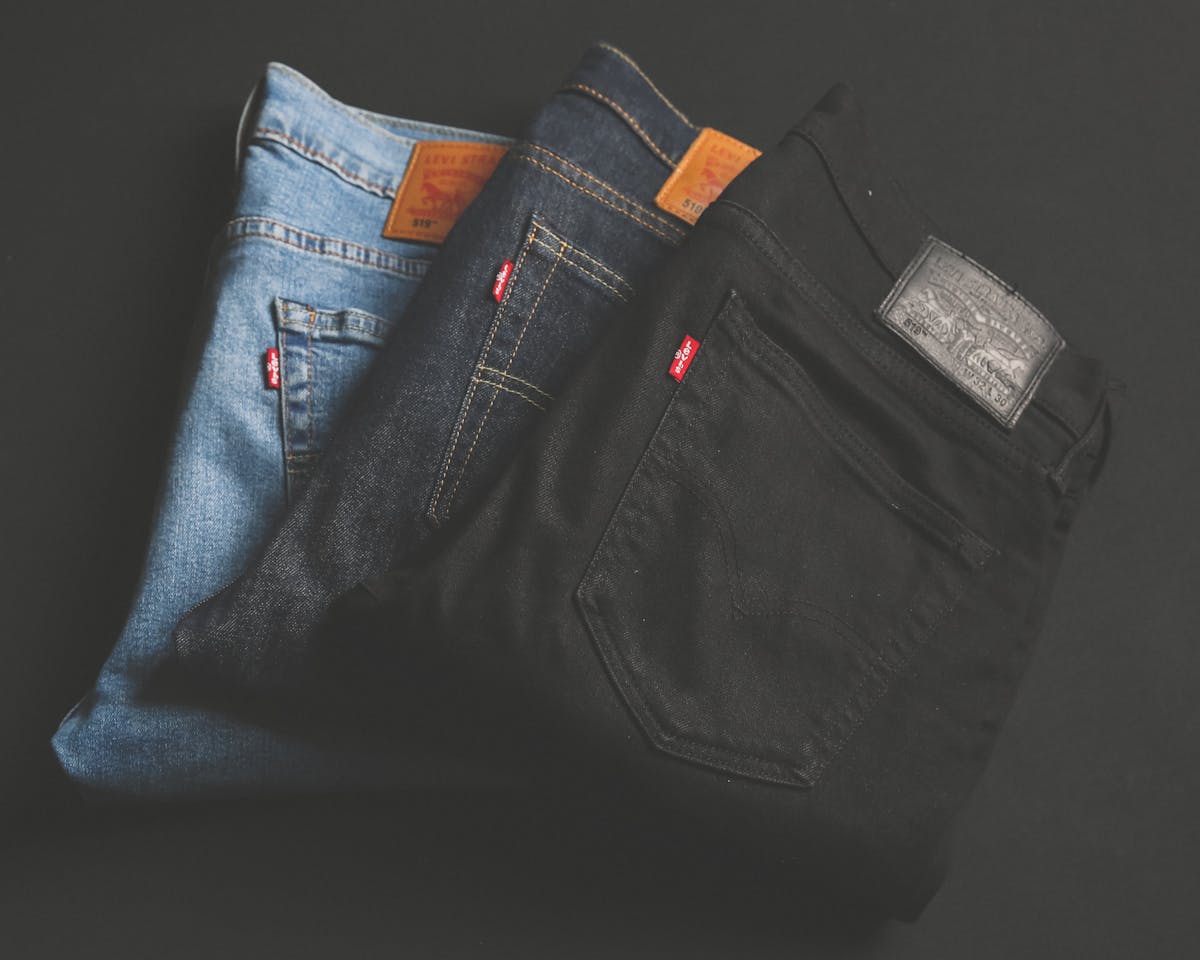
Le pliage est préférable à la suspension pour la plupart des jeans. Suspendre un jean par les passants de ceinture ou les poignets peut provoquer des étirements et des plis indésirables au niveau des points d’attache. Pliez soigneusement votre jean au niveau des genoux et rangez-le sur une étagère ou dans un tiroir. Si vous devez les suspendre, utilisez un cintre à clip au niveau de la taille qui répartit le poids uniformément, ou pliez-les sur une barre de cintre pour pantalons.
Rangez votre jean dans un endroit frais et sec, à l’abri de la lumière directe du soleil. L’exposition aux UV provoque une décoloration et affaiblit les fibres avec le temps. Un placard ou un tiroir qui ne reçoit pas la lumière directe du soleil est idéal. Évitez de ranger les jeans dans des sous-sols ou des greniers humides, où l’humidité peut provoquer des moisissures et détériorer le tissu.
Changez régulièrement vos jeans plutôt que de porter la même paire tous les jours. Porter le même jean plusieurs jours de suite concentre le stress sur les mêmes zones – en particulier les genoux, les fesses et l’entrejambe – et accélère l’usure dans ces zones très sollicitées. La rotation entre deux ou trois paires permet à chaque paire de se reposer entre les usures, prolongeant ainsi leur durée de vie. Le denim bénéficie du repos : les fibres retrouvent leur forme et leur position entre les usures, réduisant ainsi le risque de développer des dommages liés au stress.
Réparer votre denim
Même avec les soins les plus minutieux, le denim finit par montrer des signes d’usure. La bonne nouvelle est que la plupart des dommages causés au denim sont réparables, et réparer plutôt que remplacer votre jean est à la fois économique et durable. L’apprentissage des compétences de base en réparation permet de conserver vos jeans préférés en rotation pendant des années plus longtemps que prévu.
La zone la plus fréquemment endommagée par le denim est l’entrejambe, là où les cuisses se frottent pendant la marche. Cette friction crée un amincissement du tissu qui finit par se transformer en trous. Attraper cet éclaircissement tôt – avant la formation de trous – permet un renforcement qui empêche les dommages de progresser. Un patch appliqué à l’intérieur de l’entrejambe, repassé ou cousu, répartit les tensions et empêche la formation de trous. De nombreux pressings et ateliers de réparation de jeans spécialisés proposent ce service pour une somme modique.
Les trous et les déchirures aux genoux sont les deuxièmes dommages les plus courants. Contrairement aux dommages à l’entrejambe, les dommages au genou sont souvent intentionnels : de nombreuses personnes achètent des jeans vieillis avec des trous préfabriqués pour les genoux. Pour les déchirures involontaires du genou, la méthode de réparation dépend de votre esthétique préférée. Le reprisage – l’utilisation d’une machine à coudre pour tisser de nouveaux fils sur la zone endommagée – crée une réparation pratiquement invisible qui maintient l’intégrité du tissu. Le rapiéçage – placer un morceau de denim derrière le trou et coudre autour de celui-ci – crée une réparation visible qui peut être décorative ou discrète selon le tissu du patch et les coutures.
L’ourlet s’effiloche et les ourlets sont endommagés au bas de votre jean, en particulier si votre jean est trop long et traîne sur le sol. Couper l’excédent de longueur et faire ré-ourler l’ourlet par un professionnel résout ce problème de façon permanente. Si vous préférez un ourlet effiloché, une seule ligne de couture au-dessus de l’effilochage l’empêche de remonter plus haut sur la jambe et de causer des dommages plus importants.
Le remplacement des boutons et des rivets est une réparation simple que n’importe quel nettoyeur à sec ou tailleur peut effectuer. Les boutons et rivets perdus ou cassés doivent être remplacés rapidement, car la tension exercée lors de la fixation et du dégrafage peut endommager le tissu environnant lorsque la quincaillerie est manquante ou cassée. Conservez à cet effet les boutons de rechange des vieux jeans ou achetez du matériel de remplacement dans des magasins de tissus ou des fournisseurs en ligne.
Les services spécialisés de réparation de jeans proposent des techniques avancées telles que le raccommodage invisible, qui utilise les fils de votre vrai jean pour tisser un nouveau tissu sur les zones endommagées. Ces réparations sont presque indétectables et conservent l’aspect d’origine de votre jean. Bien que plus coûteuse que les réparations de base, la réparation invisible mérite d’être envisagée pour les jeans haut de gamme que vous prévoyez de porter pendant de nombreuses années.
Casser le denim brut
Le denim brut (le denim qui n’a pas été lavé ni traité après teinture) nécessite une approche particulière en matière d’entretien et de rodage. Le denim brut commence par être rigide, sombre et quelque peu inconfortable, mais se transforme en un vêtement personnalisé avec des motifs décolorés uniques qui reflètent votre corps et votre style de vie. Le processus de rodage est un engagement, mais les résultats sont inégalés par n’importe quel denim prélavé.
La règle la plus importante du denim brut est la patience. Le denim brut a besoin de temps pour s’adapter à votre corps et se décolorer. La raideur initiale s’atténuera progressivement au fur et à mesure que vous les porterez. L’indigo foncé commencera à s’estomper aux points de tension – là où vous pliez les genoux, là où vous portez votre portefeuille, là où vos cuisses se frottent. Ces décolorations se développent au fil des mois d’usure régulière et ne peuvent pas être précipitées. Le contraste entre les zones décolorées et non décolorées est ce qui rend le denim brut spécial, et il ne vient qu’avec le temps et une tenue constante.
Ne lavez pas votre denim brut pendant au moins six mois si vous le portez régulièrement. Cette période prolongée permet de développer un contraste maximal entre les zones décolorées et non décolorées. Lorsque vous finirez par les laver, vous perdrez un peu de contraste, mais les principaux motifs de fondu resteront. Certaines adeptes du denim brut attendent un an ou plus avant leur premier lavage. Plus vous attendez, plus le contraste sera spectaculaire.
Lorsque vous laverez votre denim brut, suivez la méthode de lavage des mains décrite précédemment. Le premier lavage entraînera une certaine perte de colorant – c’est normal et attendu. Votre jean sera nettement plus léger après le premier lavage qu’il ne l’était lorsqu’il était neuf. Laissez-les sécher complètement à l’air et attendez-vous à ce qu’ils soient rigides une fois secs. La rigidité s’atténuera après quelques heures de port à mesure que le tissu se conformera à nouveau à votre corps.
Le denim brut rétrécit au lavage, généralement d’environ 2,5 cm au niveau de l’entrejambe et légèrement au niveau de la taille. Tenez-en compte lorsque vous achetez du denim brut. La plupart des acheteurs de denim brut taillent légèrement (un pouce au tour de taille) et achètent des entrejambes plus longs (un à deux pouces de plus que leur mesure réelle) pour tenir compte du rétrécissement. Certaines marques de denim brut proposent des jeans « sanforisés ». Denim traité pour minimiser le rétrécissement : vérifiez si vos jeans sont sanforisés ou non avant de l’acheter.
Quand retirer votre jean
Même les jeans les mieux entretenus finissent par atteindre la fin de leur durée de vie utile. Savoir quand retirer une paire (et quoi en faire lorsque vous le faites) est la dernière étape de la connaissance en matière d’entretien du denim.
Les signes indiquant que vos jeans sont prêts à être retirés incluent des dommages importants qui ne peuvent pas être raisonnablement réparés, un tissu devenu si fin que de nouveaux dommages apparaissent fréquemment, une perte importante de couleur et de forme et des odeurs persistantes qui ne peuvent pas être éliminées même au lavage. Lorsque vos jeans ne vous vont plus bien et ne vous apportent plus de joie lorsque vous les portez, il est temps de passer à autre chose.
Les jeans retraités n’ont pas besoin d’aller à la décharge. Réutilisez-les comme projets de maison – le denim fait d’excellents tabliers, maniques, sacs fourre-tout et patchs pour d’autres jeans. Donnez-les à des organisations qui acceptent le recyclage des textiles, où ils seront décomposés et recyclés en de nouveaux produits. Certaines marques de denim proposent des programmes de reprise qui recyclent les vieux jeans en denim neuf. Un nombre croissant d’entreprises se spécialisent dans la transformation du vieux denim en matériaux d’isolation domestique, en matériaux de construction et autres produits industriels. L’objectif est d’éviter que le denim ne finisse dans les décharges, quel que soit son état.
Un bon entretien du denim est un investissement dans votre garde-robe et votre portefeuille. Un jean bien entretenu peut durer 10 ans ou plus, soit bien plus longtemps que les six mois à un an que la plupart des gens obtiennent avec un denim mal entretenu. Les pratiques simples décrites dans ce guide – laver rarement, retourner à l’envers, utiliser de l’eau froide et un détergent doux, sécher à l’air, ranger correctement et réparer rapidement – multiplient plusieurs fois la durée de vie de votre jean. L’effort est minime et les économies, tant financières qu’environnementales, sont substantielles.
Conclusion
L’entretien du jean n’est pas compliqué, mais cela nécessite de l’intention. La façon dont vous traitez vos jeans entre les utilisations détermine leur apparence et leur durée de vie. Lavez moins, séchez à l’air libre, rangez correctement et réparez rapidement. Ces pratiques simples transforment votre relation avec votre denim, transformant les jeans jetables en compagnons de garde-robe à long terme qui vieillissent gracieusement et vous servent fidèlement pendant des années.
La meilleure paire de jeans que vous posséderez est celle que vous portez depuis des années : celle qui s’est moulée sur votre corps, qui s’est décolorée aux bons endroits et qui a accumulé les marques et les souvenirs de votre vie. Traitez votre denim avec soin, et il vous récompensera avec des années de service confortable et riche en caractère qu’aucune nouvelle paire ne peut égaler.